Why Does My Egg Look Weird? (And Is it Safe to Eat?)
16 MIN READ
SHARE:
Deviled eggs are a classic dinner party staple. They are incredibly easy to make, can be stored for days, and are packed with nutrients. If you're hosting friends or family for the first time or looking for a dish to bring to your next get-together, our deviled egg recipes are sure to wow!
Keep reading to learn how to make deviled eggs, with culinary tips and tricks to make them the tastiest side dish you've ever had!
Deviled eggs have solidified their place among the best foods to serve at parties because of their creamy texture, picture-perfect presentation, and delicious flavor.
The classic deviled egg recipe is made using hard-boiled eggs that have been sliced in half lengthwise. The yolks are removed and mixed with a handful of other ingredients to create the rich filling, which is then scooped back into the egg white halves and topped with a sprinkle of paprika.
When to Serve Deviled Eggs
Deviled eggs are an appropriate finger food to serve at any type of gathering, not only for their flavor and ease but because of their versatility, as well. They can be dressed up with a caviar or roe garnish for upscale parties or served as a classic deviled egg recipe with no frills. No matter how you choose to make them, they're going to go over well.
They can be enjoyed for lunch, brunch, as a side dish, or pre-dinner appetizer. Serve them at holiday gatherings, reunions, parties, and casual get-togethers, or make a batch just for yourself to enjoy.
The Ingredients You Need for Deviled Eggs
Deviled eggs are a simple dish, requiring just a few ingredients — most of which you may already have in your pantry!
You will need:
The classic deviled egg seasoning includes salt, pepper, and paprika.
How to Boil Deviled Eggs
Hard-boiling eggs may sound simple, but the timing should be precise to get the perfect texture for your whites and yolks. If you cook them for too long, you'll end up with rubbery, overcooked eggs. If you don't boil them for long enough, the whites will be too soft to house the filling and the yolks will stay runny.
Here is the foolproof way to hard-boil your eggs:
Step 1: Fill a large pot with water. There should be enough water to submerge your eggs. You can boil as many eggs as you like at once, as long as they are completely underwater.
Step 2: Bring the water to a rolling boil, then reduce the heat so the water sits at a simmer.
Step 3: Use a large spoon to carefully put your eggs into the hot water. Then, turn the heat up so the water stays at a slow rolling boil.
Step 4: Boil the eggs for approximately 12 minutes. Then, remove the pot from the stovetop and transfer the eggs to a large bowl filled with ice water to stop them from cooking.
Once your eggs are cool, you can peel them, cut them, take out the yolks, and make your filling.
Other Ways to Boil Eggs
If you are looking to experiment with the way eggs are traditionally boiled or don't want to wait for your water to heat up, you can use other methods to get the job done, like:
Steaming: Fill a pot with just two inches of water, then place a steamer basket over top. Heat the water to a boil, then add the eggs to the basket and cover. Allow the eggs to steam for 12 minutes before removing them from the heat and placing them in an ice bath.
Baking: Heat your oven to 350 degrees Fahrenheit. Place one egg into each mold of a muffin tin, then pop the pan into the oven. Cook the eggs for 30 minutes, then carefully place the eggs in an ice bath.
What is the best deviled egg recipe? That comes down to your own personal taste and preference. This dish comes with several variations and accompaniments — each scrumptious in its own right. Here are a few of the best variations that are sure to satisfy.
Deviled Egg Recipe With Relish
Pickle juice and relish are go-to deviled egg additions. The pickle flavor adds an acidic sweetness to the rich filling while working with the mustard to offer a delicate kick to the traditional recipe. If you want to add relish to your deviled egg filling, we recommend three teaspoons for every quarter cup of mayo.
Southwest Deviled Eggs
If you prefer more spice, you can't go wrong with a Southwest twist. While mixing the filling ingredients together, add a tablespoon of salsa, a pinch of chili powder, and cumin. Spoon the mixture into the egg whites, and garnish with chopped jalapenos and grilled corn.
Guacamole Deviled Eggs
Avocados and eggs go hand-in-hand. For guacamole-inspired deviled eggs, mix a few tablespoons of mashed avocado, a sprinkle of cilantro, and a squeeze of lime juice to your egg yolk mixture. You can garnish the finished eggs with chopped tomatoes.
Tips and Tricks for Deviled Eggs
Try different filling textures: For a creamier filling, use a food processor to blend your filling ingredients. If you prefer an egg salad texture, opt for a fork to mash the yolks instead.
Pipe the filling: Cut down on the time it takes to fill the egg whites by using a piping bag to add the filling. You can use different nozzles to create textured designs for a refined presentation.
Keep the egg whites still: Keep the eggs from sliding across the serving dish by trimming a slice of the whites off the bottom to create a flat surface.
Peel the eggs carefully: You want the whites to stay intact as you peel the eggs, so do so carefully. Gently cracking and peeling eggs underwater can help the membrane come away from the egg easily.
How to Store Deviled Eggs
Deviled eggs should always be stored in the refrigerator immediately after they are made. They can last up to four days when stored correctly. Once removed from the fridge, they should be eaten within two hours to ensure quality and taste.
Create the Best Deviled Eggs for the Holidays With Sauder's Eggs
For all of your traditional holiday recipes and dinner party favorites, choose fresh eggs from proud family farms! Sauder's Eggs has quality cage-free, organic, traditional, and free-range eggs to take your recipes to the next level. Find fresh Sauder's Eggs at a store near you today!
Cracking an egg seems simple enough, but it's easy to find yourself frustrated with broken yolks, bits of shell, and a slimy mess when trying to work with eggs. Eggs are fragile, and it's easy for things to go wrong when cracking your eggs. We've compiled the best ways to crack an egg and other tips so you can elevate your kitchen skills and become an egg-cracking pro in no time.
Hone your cooking preparation abilities with some of these ways to crack eggs:
On the Countertop
The countertop is one of the best ways to crack an egg. Cracking eggs often leads to the shell shattering and contaminating the egg, forcing you to dig around in the sticky mess for a few small, slippery shell pieces. If you crack your eggs on a raised or ridged surface — like a bowl's lip — you're pushing the shell and protective membrane into the egg, increasing your chances of a shell in your egg.
Prevent this by cracking your eggs on your flat countertop. While this might seem like a recipe for disaster at first, you're unlikely to end up with eggs splattered all over your counter. Take your egg in one hand and firmly but carefully tap it on the countertop. Stop when you see a vertical crack form in the shell. Once you see this, you can take your fingers and separate the egg halves into your bowl.
On the Side of the Bowl
While the side of the bowl isn't the easiest way to get a shell-free crack, it's a tried-and-true method for egg cracking. If you don't want to crack your egg on the countertop, you can use the edge of your bowl. Make sure you're hitting the middle of the egg on the bowl's rim — this helps you create an even, cleaner split and gives you more control when pulling the egg apart with your hands.
Take the egg in one hand and tap it on the side of your bowl several times. Once the shell cracks, you can split the egg into the bowl. Watch out for any shell pieces that might have fallen into the bowl. You'll need to scoop these out to avoid contaminating your food.
With a Knife
If you're wondering how to crack an egg with more control, try using a knife. This can help you achieve a more consistent crack if you aren't the best at cracking with your hands. Place the egg in your palm with the pointy end facing your fingertips. Use an icing spatula or butter knife to strike the egg across the middle — try to do it with a quick flicking motion. A firm, fast strike will swiftly crack the egg without smashing it.
Hit Two Eggs Together
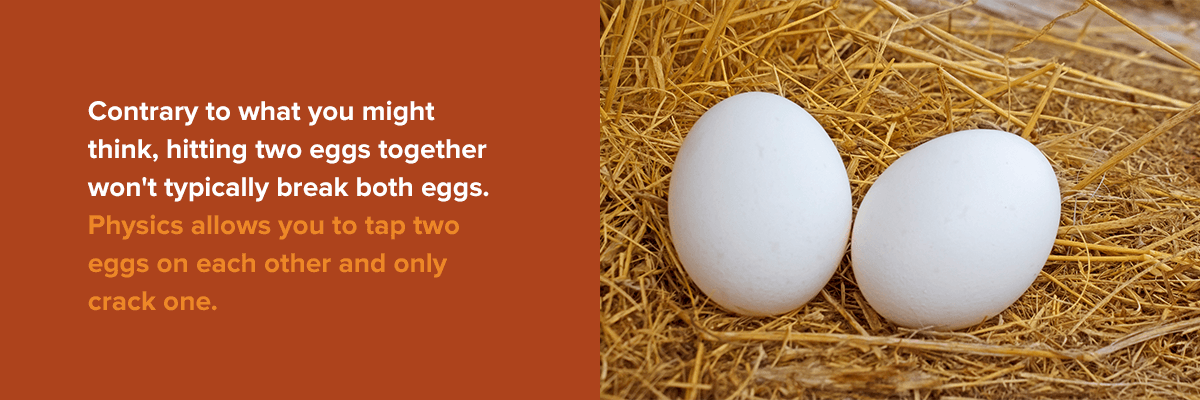
Contrary to what you might think, hitting two eggs together won't typically break both eggs. Physics allows you to tap two eggs on each other and only crack one. To do this, take one egg in each hand and gently tap the eggs together at their midpoints. One of the eggs will crack, and you can go ahead with splitting the cracked egg for your dish.
This method is best if you plan to use two eggs. You don't want to mistakenly crack the second one by hitting them together too hard and put it back in the fridge.
How to Crack an Egg With One Hand
Learning to break eggs with one hand is the way to go if you want to level up your egg-cracking abilities. One-handed egg cracking allows you to increase your cracking speed, which is especially handy if you're using lots of eggs for one recipe. It's a little tricky to explain, so grab some eggs and prepare to get a little messy as you test this method out.
Take the egg in one hand and grip it around one side with your thumb, index, and middle fingers. At the same time, hold the wider bottom end with your pinky and ring fingers. You're going to use your fingers to crack the egg — essentially, you're pulling in one direction with your thumb and pulling in the other direction with your index and middle fingers.
There should be a middle section of the egg that remains uncovered by your fingers — crack this section on a surface and then pry the egg open with your thumb, index, and middle fingers. Your pinky and ring fingers act more like stabilizers on the bottom part of the egg as you pop off the top. Pour the egg into a bowl and check for bits of shell, especially if this is one of your first attempts at cracking an egg with one hand.
With enough tries, you'll find out how to make this method work for you. Once you get the hang of it, you'll be cracking eggs one-handed in rapid succession in no time.
How to Crack an Egg Without Breaking the Yolk
There is no way to guarantee an unbroken yolk — they sometimes just happen. However, gently cracking your egg on a flat surface and carefully pulling it apart will help prevent broken yolks and shells in your eggs. Don't grip the egg halves too tightly — hold them firmly and then smoothly insert your thumbs into the crack to break the egg membrane and release the yolk and whites. Your yolk should come out cleanly. If it doesn't, turn the mistake into delicious scrambled eggs!
What Is the Best Way to Crack an Egg?
The best way to crack an egg is the method that works for you. Don't try to do anything overly complicated or straining. Pick the method that you find most comfortable and that allows you to get the most consistent results. While the flat surface method is the best for preventing the shell from crushing into the egg, it might not be the easiest for you. Test out different styles and perfect your preferred method for the best results.
Most Common Mistakes to Avoid When Cracking Eggs
Cracking already-cracked eggs: Eggshells protect the egg from bacteria, dirt, and contamination. If your egg already has a crack, you should avoid eating it. The egg might have harmful bacteria inside that could make you sick.
Cracking too hard: Putting too much force behind your cracking will cause the egg to burst and make a mess everywhere. Apply firm and swift pressure without smashing the egg.
Cracking inward: If you break your egg with inward force, it will push the shell into the egg and egg membrane. Instead, pull the egg halves outward as you break the egg to keep the egg yolk and shell separate.
Cracking over your pan or bowl: Never crack eggs directly into your cooking preparations. If your yolk breaks, you get shell in there, or you have a bad egg, you might've ruined the rest of your ingredients — a disaster if you're trying to nail a difficult egg dish on your first try.
Choose Sauder's Eggs for Fresh, High-Quality Eggs
Hens are more than just egg-laying machines. While chickens can provide us with delicious, healthy eggs year-round, no chicken will always lay perfect eggs. Every once in a while, farmers will find that a few eggs look weird among their standard egg haul. While finding a bizarre egg might seem problematic, it's usually nothing to be concerned about. Birds, like all creatures, have bodies that produce odd results sometimes. Eggs are no different — they can come in dozens of colors, textures, sizes, and shapes.
Odd eggs can have several causes, including disease and stress. Sometimes, however, they just happen, and no one knows why. You can safely eat certain deformed eggs as long as the shells are intact. If you ever feel uncomfortable eating an egg or aren't sure it's safe to eat, toss it. It's always better to be safe than sorry when it comes to food.
Let's explore all of the irregularities that can happen to your eggs and what the potential causes may be. We'll go over the causes of deformed eggs, the different types, and whether an odd egg is safe to consume.
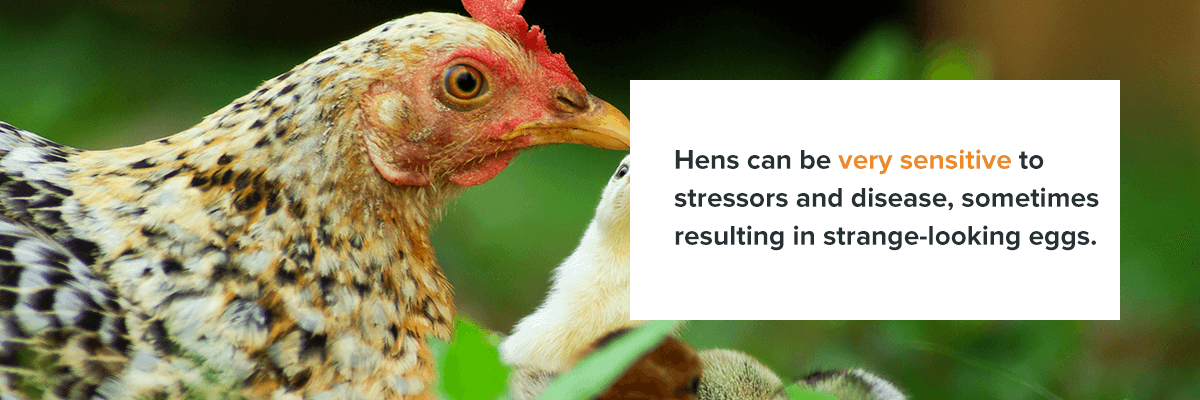
Irregular eggs can have several causes. Hens can be very sensitive to stressors and disease, sometimes resulting in strange-looking eggs. Keeping chickens happy, healthy, and stress-free is essential to producing good eggs. While farmers can't prevent deformed eggs with complete certainty, they can watch out for their causes and address them if anything seems off.
Stress
Birds can become stressed by other animals, overcrowding, changing lights, weather, and other factors. Chickens might become stressed due to frequent handling and transport, or they could be afraid of predators. There are lots of social, psychological, and physical factors that can lead to stress in a flock. Stress can cause hens to lay unusual or deformed eggs, unnecessarily putting strain on their bodies.
Farmers can reduce stress in the flock by protecting chickens from predators and excess handling. Farmers can also ensure their birds are comfortable and secure in their environment. It helps to keep chicken house lights on a regular schedule and level and watch out for overcrowding or improper rooster-to-hen ratios. Providing hens with enrichment keeps them entertained and active, which can also help reduce stress. Happy chickens produce happy eggs.
Disease
Parasites, infections, and other illnesses can all lead to egg problems. While lash eggs are the most severe result of disease, issues like infectious bronchitis can also lead to strange-looking eggs. Different conditions can put a strain on the bird and cause problems, affecting egg formation and leading to different textures or shapes among the eggs of sick birds. One weird egg isn't usually a sign of an issue, but if farmers begin to notice lots of abnormal eggs in a row, their birds might have a health issue.
Any continued pattern of strange behavior or eggs from hens might indicate a bird is sick. Farmers will then take their sick hen to a vet for treatment and diagnosis to ensure the health of the entire flock.
Age
Hen reproductive systems are like any body component — they wear down over time and experience issues when they're first forming. Young and old hens will occasionally lay unusual eggs as their reproductive systems change. Young hens will lay smaller, almost test eggs as their reproductive systems mature. Since everything is not fully developed, they might lay no yolk and other tiny eggs.
Similarly, older hens can begin laying large and unusual eggs as their reproductive system ages. Time and use can wear anyone down, and hens are no different. These larger or weird eggs are expected in older hens — the longer they've been laying, the more likely it is they'll begin to experience some problems and deformities with their eggs.
Temperature
If birds are too cold or too hot, they might stop laying eggs entirely. Additionally, uncomfortable temperatures can lead to odd-looking eggs. When hens are unhappy, stressed, or irritated, their laying process is affected. Farmers must then keep chickens protected from falling winter temperatures and rising summer heat. Birds need cozy, comfortable conditions to lay regular eggs.
Light
Light levels can affect laying habits. Chickens will stop laying eggs or will lay deformed eggs if they aren't getting enough light during the day. Daylight helps to stimulate chicken's egg layers' reproductive cycle. The more light they're exposed to, the more productive their laying habits will be. If it's winter, farmers consider adding artificial light to ensure their chickens receive enough light during the day. This measure can help them stay de-stressed and will get their eggs back to normal.
Food
Getting normal, healthy eggs starts with what chickens eat every day. Chickens need to maintain their energy, calcium, and protein levels to produce eggs efficiently and quickly. Hens need high-quality, nutrient-dense food to ensure they get everything they need to make eggs without deformities. If someone feeds their chickens table scraps, scratch feeds, and whole grains, the birds' diets will become inadequate, and they'll produce deformed eggs.
Diet imbalances can even cause issues like oviductal prolapse in hens. This is when a hen's reproductive tract expels along with an egg due to the egg being too large or the hen being too fat. Oviductal prolapse can result in permanent damage and even death for affected hens. Farmers can help their birds avoid egg deformities and health problems with nutritious feed. When chickens receive all their nutrition requirements, they can easily produce top-quality eggs.
Types of Irregular Eggs
Here are some possible egg irregularities and whether you can eat them:
Double Yolks
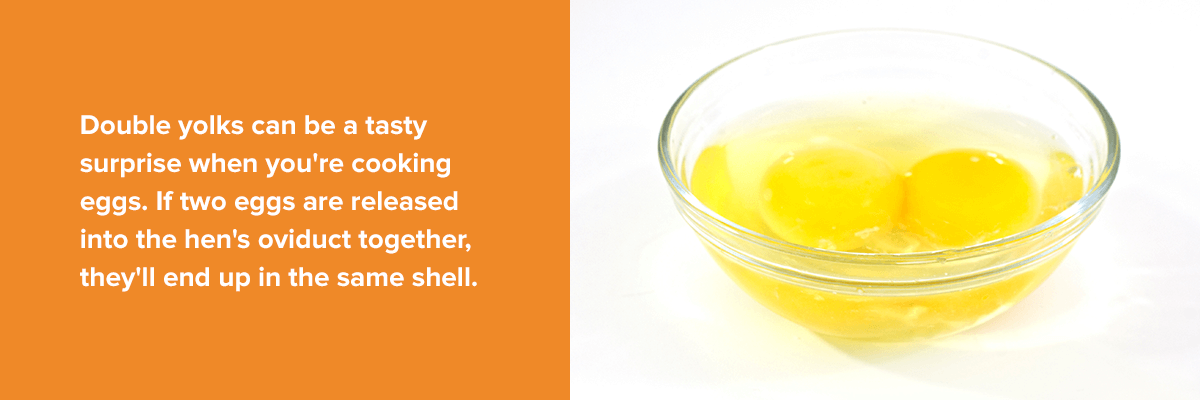
Double yolks can be a tasty surprise when you're cooking eggs. If two eggs are released into the hen's oviduct together, they'll end up in the same shell. Double-yolk eggs are often larger than single-yolk eggs, which can make them more difficult for hens to pass.
We don't know why some chickens produce double yolks, but they're a delightful surprise. Some birds are genetically predisposed to lay double-yolk eggs and will even be bred to have them almost exclusively. Immature laying hens, called pullets, more commonly lay eggs with two yolks.
Double yolks are perfectly safe to eat and are great for omelets if you're feeling hungry. You can even buy cartons of eggs that intentionally all have double yolks!
No Yolk
These weird eggs have some equally weird names — they're also called wind eggs, cock eggs, fart eggs, and fairy eggs. Wind eggs can happen in mature hens but often occur in pullets. Pullets will usually lay wind eggs when their reproductive system is "warming up," and they aren't fully developed. A mature hen might lay a wind egg — if some reproductive tissue breaks away and stimulates egg-producing glands, you can end up with a no-yolk egg. The reproductive tissue gets treated like a yolk and becomes wrapped in albumen, membranes, and shell.
No-yolk eggs are edible and delicious.
No Shell
Eggs without shells can look pretty strange and alien. Since the shell is one of the last steps of the egg-laying process, it can get skipped over for several reasons. Pullets might lay no shell eggs as their first egg attempts, but no shell eggs can also occur from nutritional deficiencies like insufficient protein or calcium in the hen. Additionally, stress or phosphorous and vitamin D deficiency can lead to no shell eggs occurring.
Avoid eating no-shell eggs — the shell creates a protective barrier around the egg. Without this barrier, you have no way of knowing what bacteria and contamination are carried in the egg.
Thin Shells
Thin shells typically occur due to high environmental temperatures. Older hens may also produce thinner-shelled eggs as their oviducts begin to wear out.
Thin-shelled eggs are safe to eat as long as the shell has not been punctured or cracked. You likely won't find thin-shelled eggs in a carton you buy at the store, however, as they can't be easily processed.
Sandpaper Shells
Eggs with rough or sandpaper shells might seem like odd eggs. They don't occur often, but they can be more common in early lays. A double ovulation might produce one sandpaper egg and one no-shell egg. Additionally, excess vitamin D or calcium intake, disease, and defective shell glands can all lead to these eggs.
These eggs are also called pimpled eggs, and the size of their lumps of calcium can influence their grade. Smaller lumps can still earn an egg a Grade A quality, for instance. Like thin shells, sandpaper shell eggs are safe to eat if the shell remains completely intact.
Flat Eggs
A flat or slab-sided egg is caused by a second egg entering the shell gland before the first egg leaves. Since the second egg hasn't completely calcified, the side that contacts the first egg becomes flattened and deformed. This process might occur due to changes in the chicken house lighting, disease, or stress. The flat side of the egg might have a thinner shell, so check for cracks or holes before eating.
Egg Within an Egg
An egg inside of an egg is called a counter-peristalsis contraction. These eggs are the result of an almost-ready egg reversing up the reproductive tract. Once it's here, it might get another albumen layer and second shell, or it can meet up with a second egg, and the two become encased in one shell together. We don't know why this happens, but it makes for an exciting breakfast surprise.
Overly Large Eggs
These eggs will often have a double yolk, although they might just be large, single-yolk eggs. The oviducts of older hens typically start to lose their elasticity, which can lead to larger eggs. It's unusual to see overly large eggs in young hens, but you'll see older hens producing more and more large eggs as they age. Large eggs are safe to eat, whether they have one yolk or two.
Overly Small Eggs
These eggs will usually come from pullets. Since their reproductive systems aren't fully developed, they might lay a few smaller eggs before they start producing standard-sized eggs. Too-small eggs will usually have missing yolks. You can eat smaller eggs — you might even eat a couple in one sitting since they're tiny!
Strange Coloration
Different eggshell colors can have different causes, like breed or diet. Eggs with unusual or missing pigmentation are totally safe to eat. Stress is the usual culprit — heat stress, in particular, can cause incomplete pigmentation. You might also see strange egg coloration due to viral infections or poor nutrition.
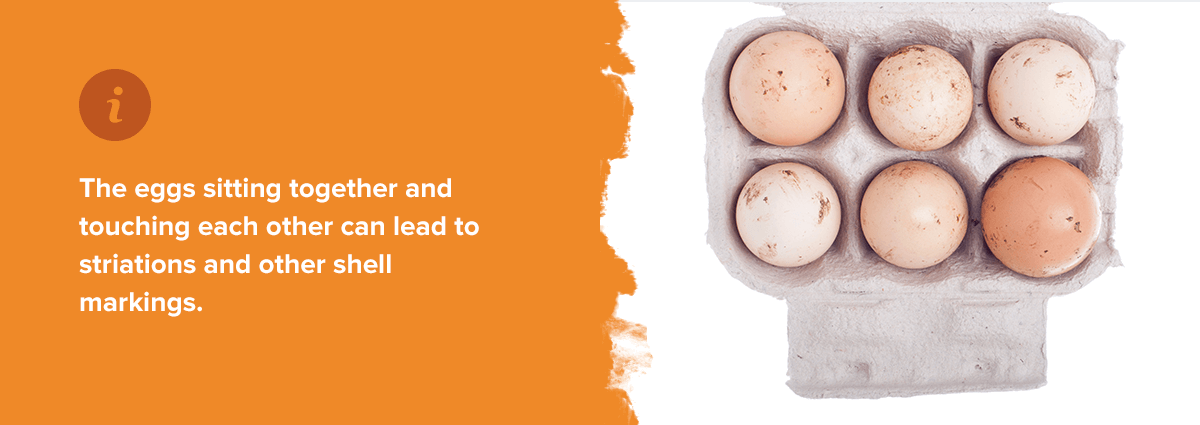
Another strange coloration you may see is striation. Coloring striations are caused by two eggs sitting in the shell gland pouch at the same time. The eggs sitting together and touching each other can lead to striations and other shell markings. If they notice unusual egg coloration, a farmer should check the chicken's health to ensure the bird isn't stressed or in need of medical attention.
Blood Spots
While blood spots might seem scary or off-putting, they won't hurt you, and you can eat them without worry. These spots might be large clots that swim around in the albumen or tiny speckles in the yolk. Many people often think these are developing embryos, but this isn't the case. Fertilized egg yolks have white spots, not blood, inside the yolk.
If you were to get eggs right from the hen, you might see the occasional egg with blood on the shell. These spots are the result of an overstretched vent, which is common among young hens. Simply wash off the shell and eat the egg as usual. When buying a carton of eggs in the store, you won't usually see spots on the shell — companies often wash eggs with approved soaps to clean them before packaging. Blood spots are usually rare and aren't anything to worry about.
Strange Texture
There are lots of potentially strange textures you could see in your eggs. Wrinkles, pimples, rough speckling, lumps, bumps, and more are all potential textures you'll see.
One strange texture you might see is corrugated eggs. Corrugation happens during the plumping process — where membrane-covered eggs are pumped with nutrient-rich fluids before the shell is added. If plumping terminates before the whole process finishes, you get a corrugated egg. This error might be due to poor nutrition, heat stress, or other issues with birds.
These textures are usually due to issues in the shell gland, excess calcium, or some other internal factor. They usually aren't an issue — as long as the shell isn't broken — and won't affect the taste of the egg.
Strange Shape
Like textures, shell shapes can come in wildly different configurations. Young hens often have immature shell glands, which can lead to odd shell shapes. This is usually nothing to worry about since the eggs will become normal once the hen reaches maturity.
For mature or older hens with fully-developed shell glands, strange shapes can occur from stress. Additionally, if a bird has infectious bronchitis, it might have resulted in a defective shell gland. You might notice oddly-shaped eggs with one side flat, excessively long, or bumpy. These odd shapes are safe to eat as long as the shell is intact.
Sauder's Eggs and Animal Care
Sauder's Eggs works tirelessly to provide happy, healthy hens that produce high-quality eggs. We care about animal welfare, so our eggs are 100% cage-free and free-range. We work with our family farms to ensure our animals are treated with care and respect. Learn more about our animal care practices here.
When you purchase our eggs, you know you're getting delicious, fresh eggs from hens that are well taken care of. Sauder's Eggs is proud to provide quality eggs that you can enjoy while also supporting ethical farming practices.

 Deviled eggs are a classic dinner party staple. They are incredibly easy to make, can be stored for days, and are packed with nutrients. If you're hosting friends or family for the first time or looking for a dish to bring to your next get-together, our deviled egg recipes are sure to wow!
Keep reading to learn how to make deviled eggs, with culinary tips and tricks to make them the tastiest side dish you've ever had!
Deviled eggs are a classic dinner party staple. They are incredibly easy to make, can be stored for days, and are packed with nutrients. If you're hosting friends or family for the first time or looking for a dish to bring to your next get-together, our deviled egg recipes are sure to wow!
Keep reading to learn how to make deviled eggs, with culinary tips and tricks to make them the tastiest side dish you've ever had!
 What is the best deviled egg recipe? That comes down to your own personal taste and preference. This dish comes with several variations and accompaniments — each scrumptious in its own right. Here are a few of the best variations that are sure to satisfy.
 For all of your traditional holiday recipes and dinner party favorites, choose fresh eggs from proud family farms! Sauder's Eggs has quality cage-free, organic, traditional, and free-range eggs to take your recipes to the next level. Find fresh Sauder's Eggs at a store near you today!
 Cracking an egg seems simple enough, but it's easy to find yourself frustrated with broken yolks, bits of shell, and a slimy mess when trying to work with eggs. Eggs are fragile, and it's easy for things to go wrong when cracking your eggs. We've compiled the best ways to crack an egg and other tips so you can elevate your kitchen skills and become an egg-cracking pro in no time.
 Contrary to what you might think, hitting two eggs together won't typically break both eggs. Physics allows you to tap two eggs on each other and only crack one. To do this, take one egg in each hand and gently tap the eggs together at their midpoints. One of the eggs will crack, and you can go ahead with splitting the cracked egg for your dish.
This method is best if you plan to use two eggs. You don't want to mistakenly crack the second one by hitting them together too hard and put it back in the fridge.
Contrary to what you might think, hitting two eggs together won't typically break both eggs. Physics allows you to tap two eggs on each other and only crack one. To do this, take one egg in each hand and gently tap the eggs together at their midpoints. One of the eggs will crack, and you can go ahead with splitting the cracked egg for your dish.
This method is best if you plan to use two eggs. You don't want to mistakenly crack the second one by hitting them together too hard and put it back in the fridge.
 Hens are more than just egg-laying machines. While chickens can provide us with delicious, healthy eggs year-round, no chicken will always lay perfect eggs. Every once in a while, farmers will find that a few eggs look weird among their standard egg haul. While finding a bizarre egg might seem problematic, it's usually nothing to be concerned about. Birds, like all creatures, have bodies that produce odd results sometimes. Eggs are no different — they can come in dozens of colors, textures, sizes, and shapes.
Odd eggs can have several causes, including disease and stress. Sometimes, however, they just happen, and no one knows why. You can safely eat certain deformed eggs as long as the shells are intact. If you ever feel uncomfortable eating an egg or aren't sure it's safe to eat, toss it. It's always better to be safe than sorry when it comes to food.
Let's explore all of the irregularities that can happen to your eggs and what the potential causes may be. We'll go over the causes of deformed eggs, the different types, and whether an odd egg is safe to consume.
Hens are more than just egg-laying machines. While chickens can provide us with delicious, healthy eggs year-round, no chicken will always lay perfect eggs. Every once in a while, farmers will find that a few eggs look weird among their standard egg haul. While finding a bizarre egg might seem problematic, it's usually nothing to be concerned about. Birds, like all creatures, have bodies that produce odd results sometimes. Eggs are no different — they can come in dozens of colors, textures, sizes, and shapes.
Odd eggs can have several causes, including disease and stress. Sometimes, however, they just happen, and no one knows why. You can safely eat certain deformed eggs as long as the shells are intact. If you ever feel uncomfortable eating an egg or aren't sure it's safe to eat, toss it. It's always better to be safe than sorry when it comes to food.
Let's explore all of the irregularities that can happen to your eggs and what the potential causes may be. We'll go over the causes of deformed eggs, the different types, and whether an odd egg is safe to consume.
 Irregular eggs can have several causes. Hens can be very sensitive to stressors and disease, sometimes resulting in strange-looking eggs. Keeping chickens happy, healthy, and stress-free is essential to producing good eggs. While farmers can't prevent deformed eggs with complete certainty, they can watch out for their causes and address them if anything seems off.
 Similarly, older hens can begin laying large and unusual eggs as their reproductive system ages. Time and use can wear anyone down, and hens are no different. These larger or weird eggs are expected in older hens — the longer they've been laying, the more likely it is they'll begin to experience some problems and deformities with their eggs.
 Light levels can affect laying habits. Chickens will stop laying eggs or will lay deformed eggs if they aren't getting enough light during the day. Daylight helps to stimulate chicken's egg layers' reproductive cycle. The more light they're exposed to, the more productive their laying habits will be. If it's winter, farmers consider adding artificial light to ensure their chickens receive enough light during the day. This measure can help them stay de-stressed and will get their eggs back to normal.
 Double yolks can be a tasty surprise when you're cooking eggs. If two eggs are released into the hen's oviduct together, they'll end up in the same shell. Double-yolk eggs are often larger than single-yolk eggs, which can make them more difficult for hens to pass.
We don't know why some chickens produce double yolks, but they're a delightful surprise. Some birds are genetically predisposed to lay double-yolk eggs and will even be bred to have them almost exclusively. Immature laying hens, called pullets, more commonly lay eggs with two yolks.
Double yolks are perfectly safe to eat and are great for omelets if you're feeling hungry. You can even buy cartons of eggs that intentionally all have double yolks!
Double yolks can be a tasty surprise when you're cooking eggs. If two eggs are released into the hen's oviduct together, they'll end up in the same shell. Double-yolk eggs are often larger than single-yolk eggs, which can make them more difficult for hens to pass.
We don't know why some chickens produce double yolks, but they're a delightful surprise. Some birds are genetically predisposed to lay double-yolk eggs and will even be bred to have them almost exclusively. Immature laying hens, called pullets, more commonly lay eggs with two yolks.
Double yolks are perfectly safe to eat and are great for omelets if you're feeling hungry. You can even buy cartons of eggs that intentionally all have double yolks!
 Thin shells typically occur due to high environmental temperatures. Older hens may also produce thinner-shelled eggs as their oviducts begin to wear out.
Thin-shelled eggs are safe to eat as long as the shell has not been punctured or cracked. You likely won't find thin-shelled eggs in a carton you buy at the store, however, as they can't be easily processed.
Thin shells typically occur due to high environmental temperatures. Older hens may also produce thinner-shelled eggs as their oviducts begin to wear out.
Thin-shelled eggs are safe to eat as long as the shell has not been punctured or cracked. You likely won't find thin-shelled eggs in a carton you buy at the store, however, as they can't be easily processed.
 These eggs will often have a double yolk, although they might just be large, single-yolk eggs. The oviducts of older hens typically start to lose their elasticity, which can lead to larger eggs. It's unusual to see overly large eggs in young hens, but you'll see older hens producing more and more large eggs as they age. Large eggs are safe to eat, whether they have one yolk or two.
 Another strange coloration you may see is striation. Coloring striations are caused by two eggs sitting in the shell gland pouch at the same time. The eggs sitting together and touching each other can lead to striations and other shell markings. If they notice unusual egg coloration, a farmer should check the chicken's health to ensure the bird isn't stressed or in need of medical attention.
 Sauder's Eggs works tirelessly to provide happy, healthy hens that produce high-quality eggs. We care about animal welfare, so our eggs are 100% cage-free and free-range. We work with our family farms to ensure our animals are treated with care and respect. Learn more about our animal care practices here.
When you purchase our eggs, you know you're getting delicious, fresh eggs from hens that are well taken care of. Sauder's Eggs is proud to provide quality eggs that you can enjoy while also supporting ethical farming practices.
Sauder's Eggs works tirelessly to provide happy, healthy hens that produce high-quality eggs. We care about animal welfare, so our eggs are 100% cage-free and free-range. We work with our family farms to ensure our animals are treated with care and respect. Learn more about our animal care practices here.
When you purchase our eggs, you know you're getting delicious, fresh eggs from hens that are well taken care of. Sauder's Eggs is proud to provide quality eggs that you can enjoy while also supporting ethical farming practices.

